
Göbekli Tepe Explained: New Discoveries About the World’s Oldest Temple and Ancient Knowledge
How archaeology, recent discoveries, and intelligence analysis are rewriting the origins of civilization.

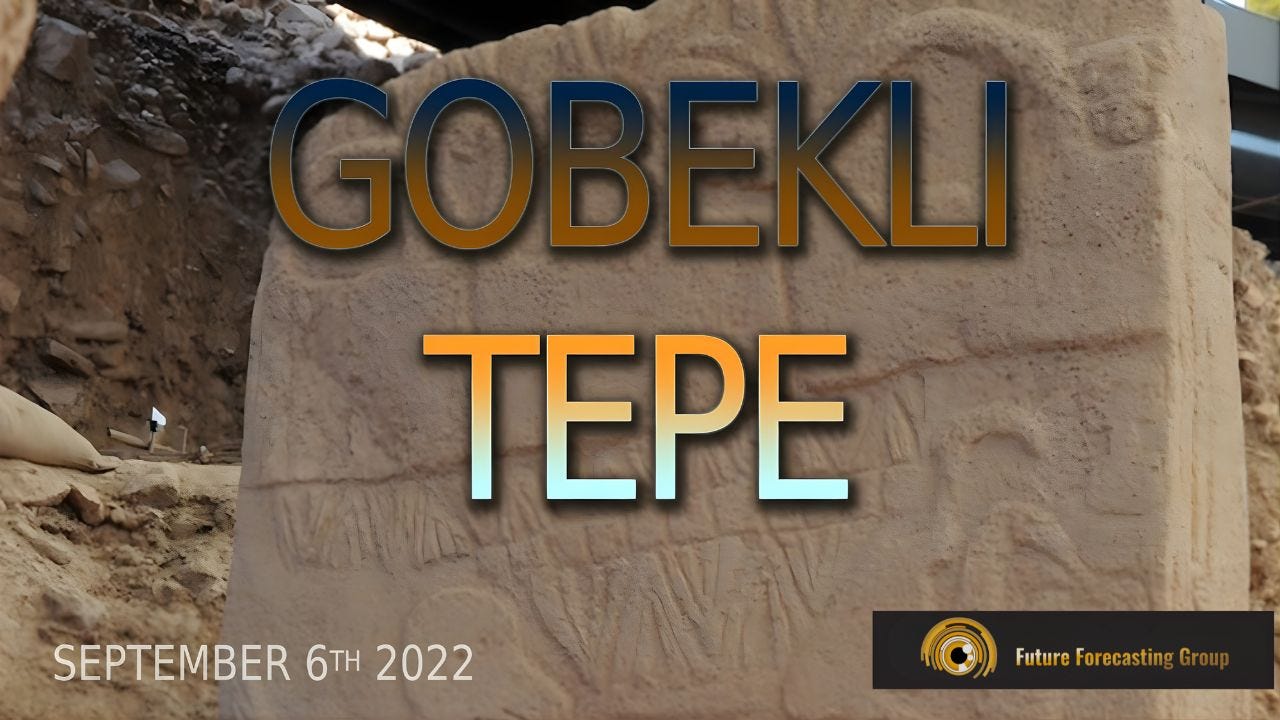
“What if what we call history is merely the re-dissemination — not the discovery — of ancient knowledge?”
— Excerpt, FFG Remote Viewing Session (September 6, 2022)
🜁 A Lost World, Rediscovered
Göbekli Tepe — perched on a windswept plateau in southeastern Turkey — has challenged the foundations of archaeology since its scientific unveiling in the 1990s. Long regarded as the world’s oldest known temple complex, with monumental T-shaped pillars carved by pre-agricultural hunter-gatherers, its existence forces a quiet but profound rethinking of how human cognition, culture, and social organization first emerged.
In 2022, our remote viewing team explored the site as an intelligence target and surfaced a set of striking themes and paradoxes — from cosmological symbolism to the unresolved question of why such a monumental complex was deliberately buried. In this piece, we revisit those early insights alongside recent scientific discoveries (through late 2025) that now begin to validate, challenge, and deepen what was glimpsed in that original session.
🜂 Ancient Knowledge: Real and Visible in Stone
One of the central themes to emerge from our 2022 session was that Göbekli Tepe functioned as more than a ritual gathering place. Viewers repeatedly described the site as encoding knowledge — not only symbolic, but structured, with strong references to celestial cycles and deeper cosmological order.
Recent research points in a similar direction.
Analysis of the carvings and pillar motifs suggests that at least one pillar may encode what some researchers believe could represent the world’s oldest known solar calendar, implying a sophisticated understanding of astronomical cycles embedded directly into the architecture.
✔ What this means: Göbekli Tepe was likely not just a ceremonial space, but a repository of symbolic and technical knowledge — a form of stone-based memory system where cosmology, timekeeping, and meaning converged in physical form.
🜄 Experimental Societies — Not Just Simple Hunters
During the session, multiple viewers described scenes involving intervention in human development — experimentation, altered states, and changes in social roles. Whatever the mechanism, the consistent impression was that this was not a passive religious site, but a place where human experience itself was being shaped.
Archaeology is now moving closer to that interpretation.
New excavations across the broader Taş Tepeler region — including Karahan Tepe and Sefer Tepe — have revealed dense networks of related sites, complex iconography, and human-face reliefs and statues. Together, they suggest long-term occupation, shared symbolic systems, and coordinated communities rather than isolated ceremonial visits.
✔ Implication: Göbekli Tepe and its surrounding sites may represent an early cultural network experimenting with identity, belief, and social organization — not simply a single temple used intermittently by nomadic groups.
🜃 Why Was Göbekli Tepe Buried?
One question surfaced repeatedly in the session:
Why intentionally bury something so monumental?
Today, most archaeologists agree that the main enclosures were deliberately backfilled rather than abandoned to erosion or natural collapse. The scale and care of this process suggest intention — not destruction, but deliberate closure.
Some researchers argue that the act of burial itself may have been meaningful: a way of sealing the site, preserving it, or ritually ending its function, much like placing knowledge into long-term storage.
✔ Remote-viewing resonance: The session consistently implied that the burial was not accidental or chaotic, but purposeful — potentially to conceal, protect, or retire whatever the site once facilitated, whether that was ritual knowledge, symbolic systems, or something more technical in nature.
🜁 Meteors, Memory, and Monumentality
One of the more unusual phrases to arise in the 2022 session was: “What if meteors are made?”
Taken literally, this sits outside mainstream science. But symbolically, it aligns with something archaeology does support: that Göbekli Tepe contains strong astronomical imagery, possibly referencing comet events, star cycles, solstices, and catastrophic changes in the sky remembered through myth.
Several pillars appear to encode animal constellations and celestial alignments, and some researchers link these symbols to major climatic events near the end of the last Ice Age.
✔ Archaeological context: The idea that ancient people recorded cosmic disruptions in stone — encoding memory of celestial events into architecture — closely mirrors the session’s emphasis on the sky as both a source of danger and of transformative knowledge.
🎥 Full Remote Viewing Session (September 2022)
Presented in full for transparency and independent evaluation. The complete unedited session where FFG viewers explore Göbekli Tepe’s purpose, symbolism, and burial.
🜂 Putting It All Together
Göbekli Tepe appears to have been:
🜁 A living archive of symbolic knowledge — possibly early cosmology encoded in stone.
🜂 A central node within a wider network of Neolithic communities across the Taş Tepeler region.
🜄 A site deliberately buried, likely as part of ritual closure, preservation, or long-term containment.
🜃 A challenge to the traditional model of history — suggesting complex organization and symbolic systems may have emerged before agriculture, not after.
🜀 Closing Reflection — Beyond History
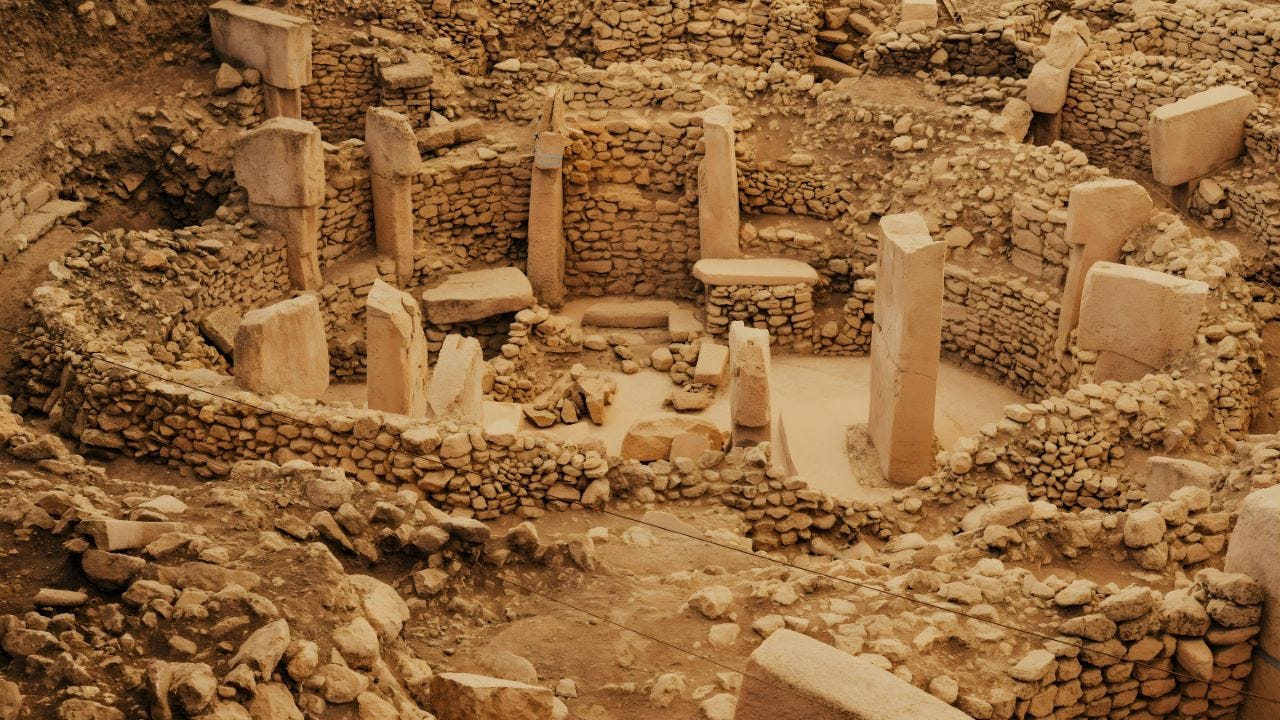
For decades, Göbekli Tepe was treated as an anomaly. It is now emerging as a cornerstone in our understanding of early symbolic thought — a place where knowledge was not only practiced, but carved into permanence.
Long before many of today’s findings were published, our 2022 remote viewing session returned to the same quiet themes: knowledge passed forward, a structure sealed with intention, and a site designed to outlast its makers. Not as proof, but as an echo — an independent signal moving through the same terrain.
If history is a tapestry, Göbekli Tepe may be one of its first bright threads — buried for millennia, not by accident, but by design.
📩 Subscribe to FFG Intelligence
For insights that bridge remote perception, ancient systems, and tomorrow’s developments — delivered with analytical precision and narrative depth.

Future Forecasting Group is comprised of the best non-military remote viewing team in the world, with decades of experience and a track record to match.
Disclaimer
This publication is for informational and educational purposes only. Remote viewing data is inherently speculative and should not be interpreted as fact, proof, or actionable advice. Future Forecasting Group does not guarantee the accuracy, outcome, or implications of any remote viewing content. Readers should use critical thinking and conduct independent research.
another excellent session; saw this some time ago on the FFG site and it still fascinates...
Site of the first Trump
Bible